
Field Guide
Hexagon Mentorship Program
Design for one chapter. Build for many. A service design story about co-founding a mentorship program that scaled to 7 active chapters nationally and 5 internationally.
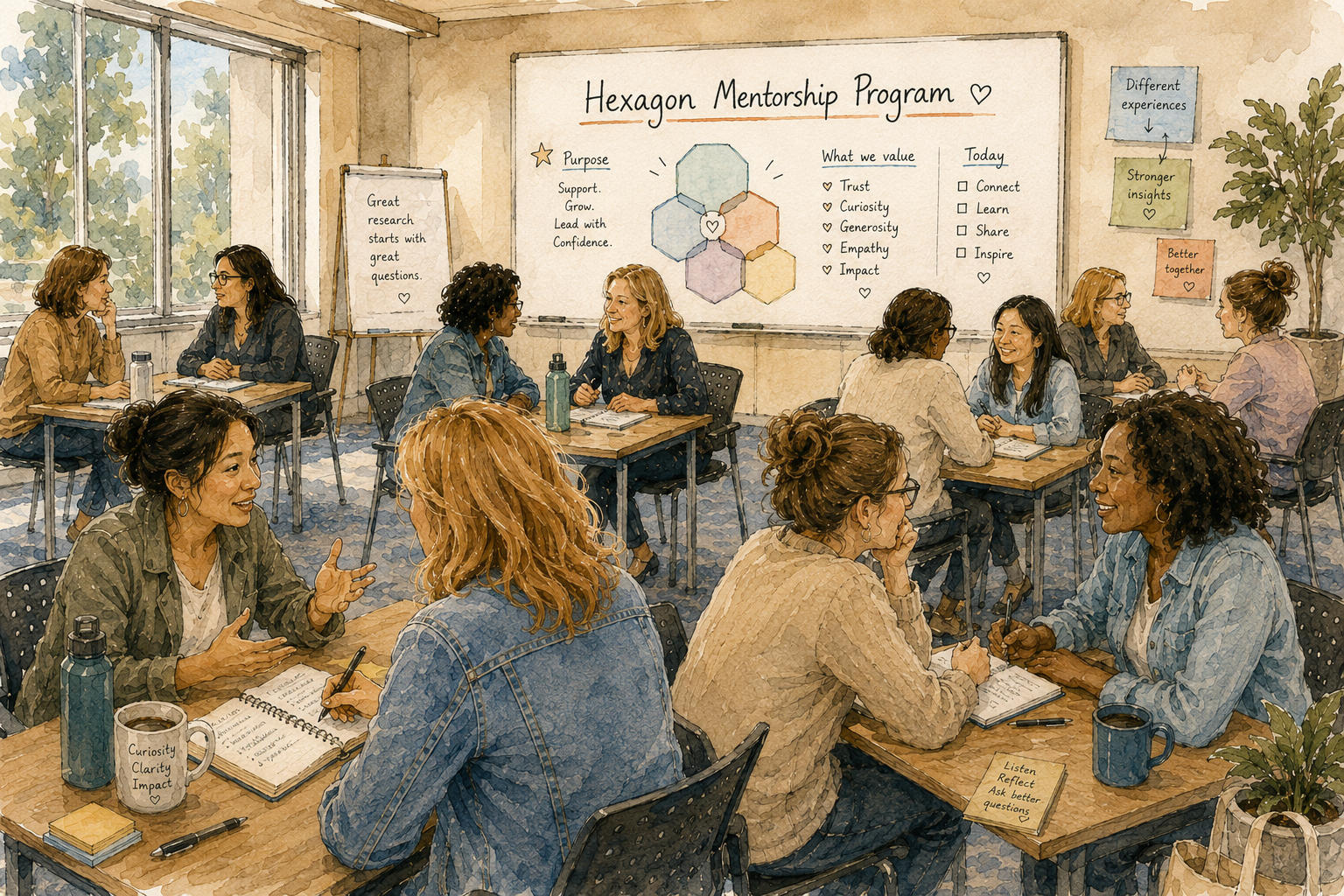
What We Found
The retention of women in tech relies on relaitonships
“One relationship can change a career. A network can change many.”
Program design principle
The problem was not that women in UX lacked ambition, talent, or community. The problem was that too many support systems were temporary. Benchmarking other mentorship efforts showed a pattern: many were one-night networking events, speed rounds, or meet-and-greets. They created energy, but not continuity. The opportunity was to design something more durable: a structured, repeatable mentorship system with cohorts, prompts, documentation, feedback loops, and a model other chapters could adopt.
Why It Matters
Retention is not only an individual problem. It is an infrastructure problem.
The program began with a hard question: how do we retain more women in User Experience?
The answer was not simply “more mentorship.” It was a model that could be used again and again: clear roles, quarterly cohorts, repeatable prompts, mentor guidance, feedback collection, and a starter pack for other chapters.
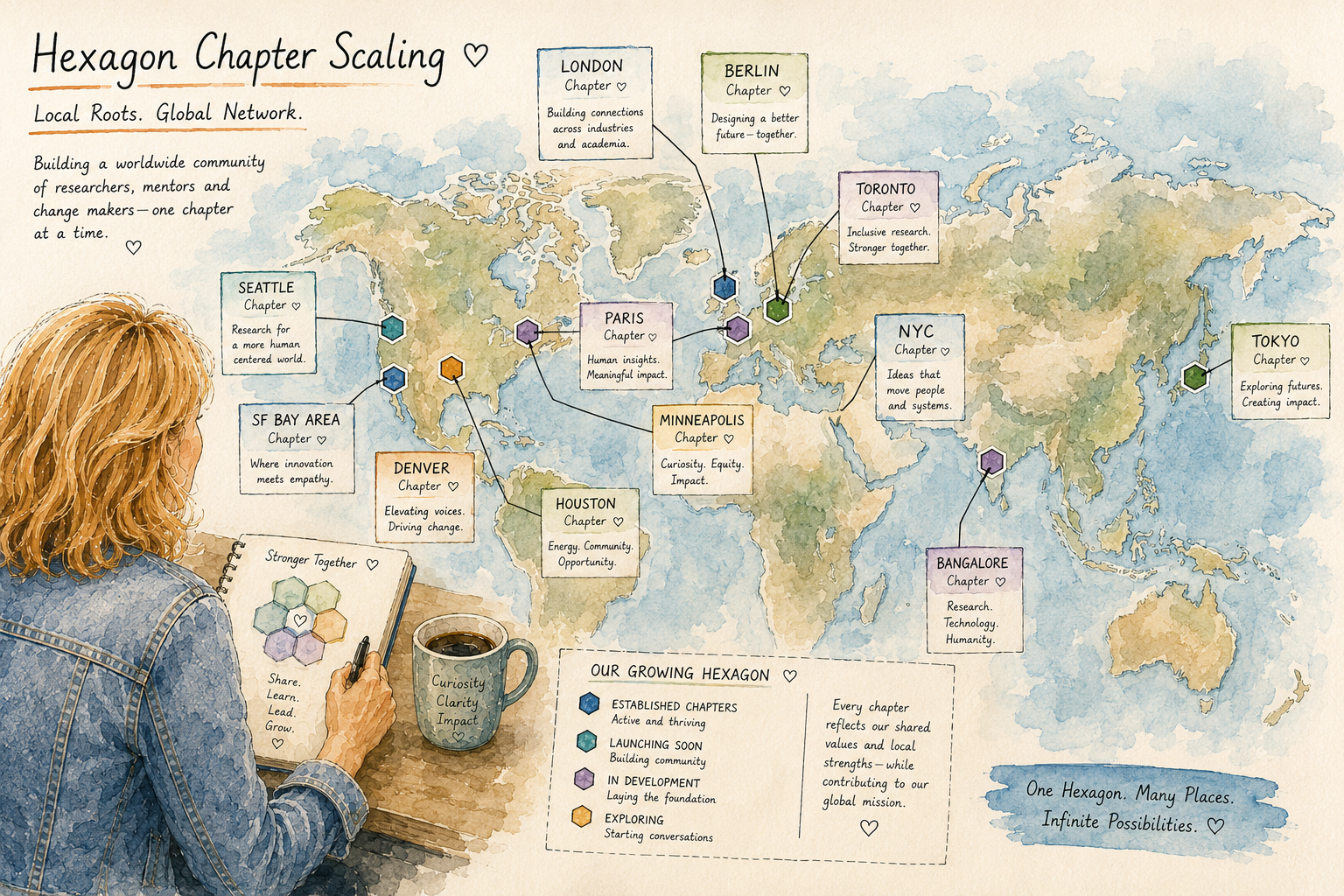
By 2020, the program had grown to 7 active national chapters and 5 international chapters.
The Original Question
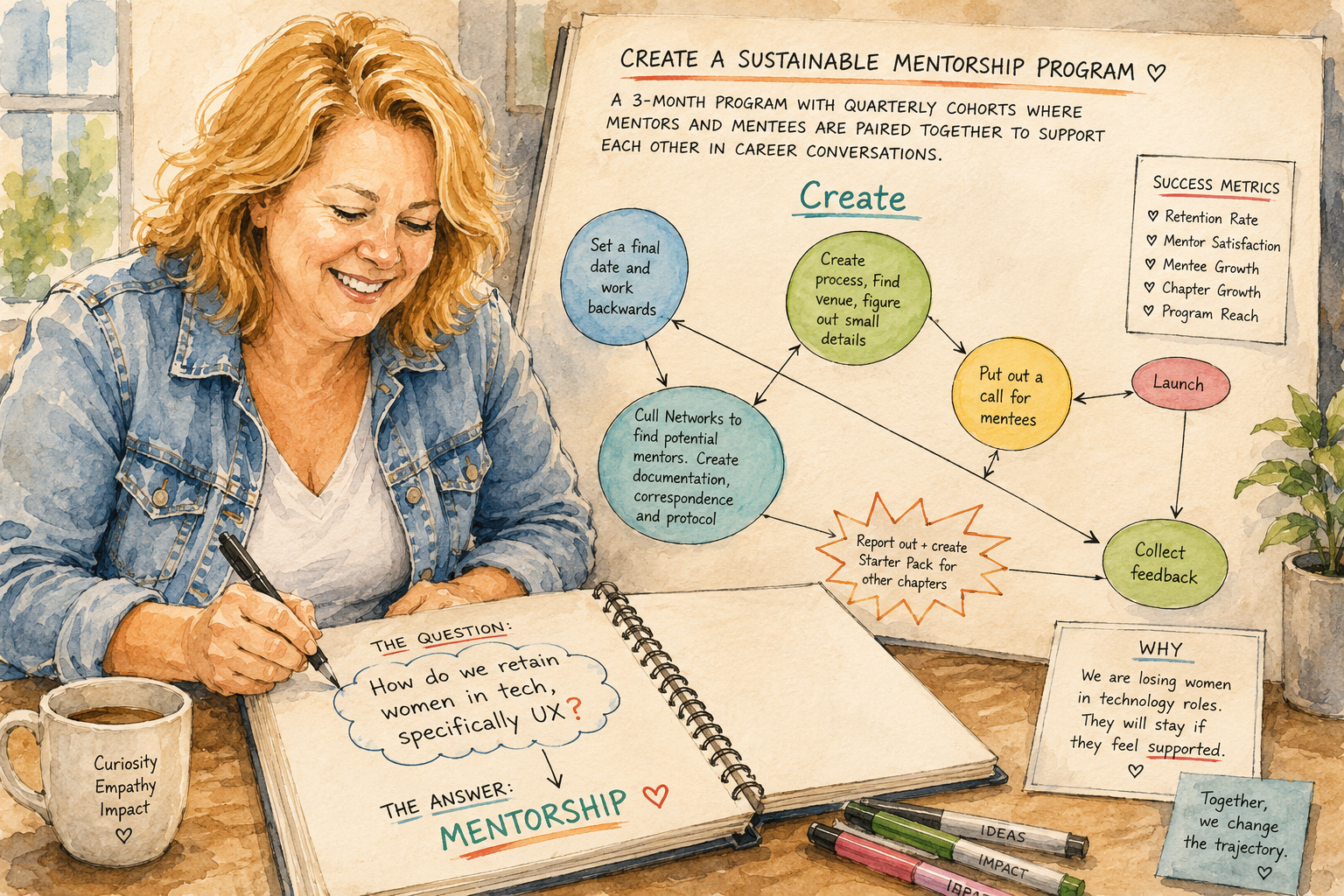
How do we retain women in User Experience?
We started with the reality that women leave technology roles at an alarming rate. There are three reasons for this, only one of which we could do something about. The first was biology: the mommy track (not true for all women but some.) The second was sexual assualt or sexual harrasmment (or the witnessing of it).
The final one was mentorship. We found that if just one perosn is supportive of a woman in tech, she is five times more liekly to stay.
The design challenge was to create something structured enough to help, light enough to run, and clear enough to scale?
How We Got There
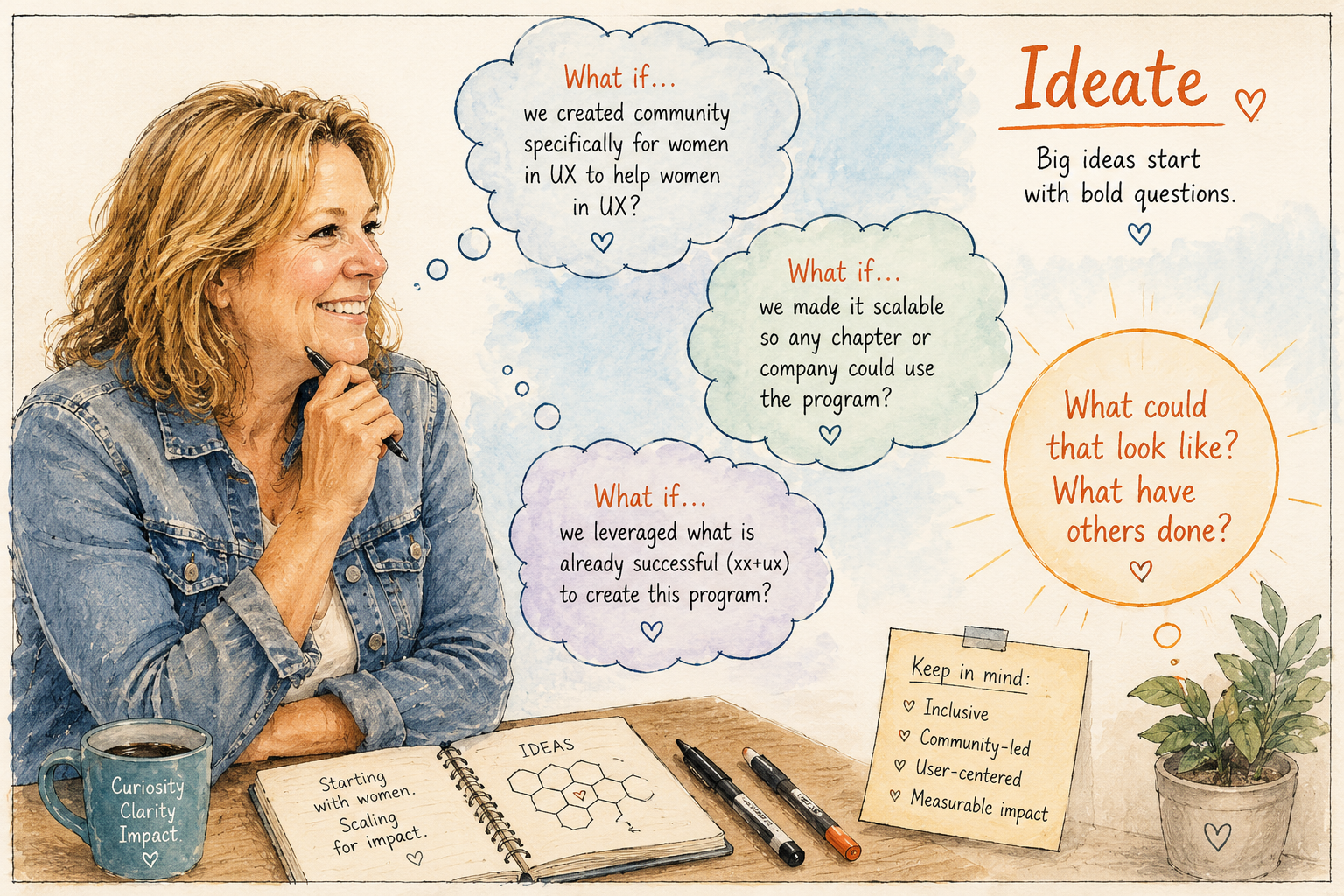
We treated mentorship as a design problem.
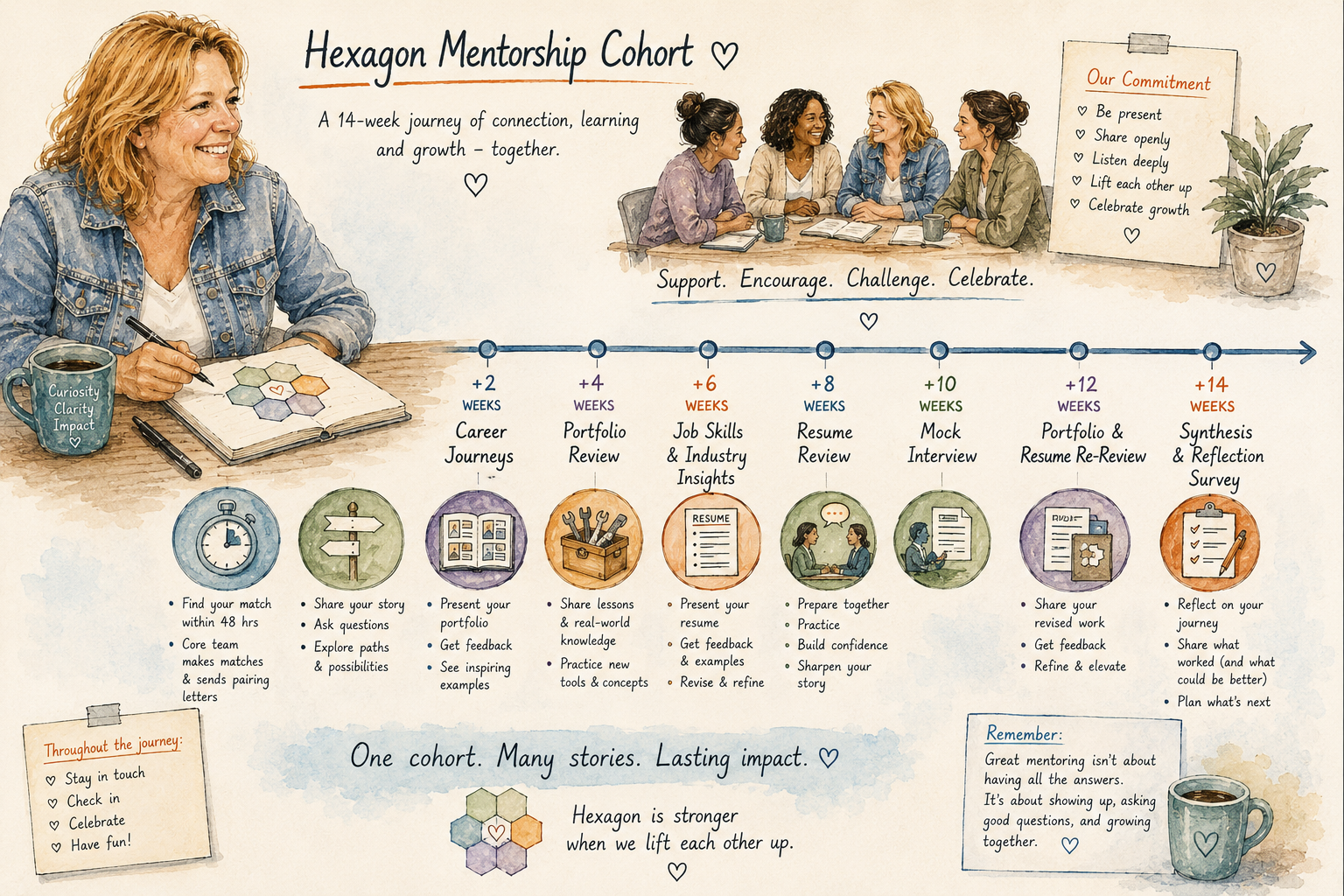
We identified the problem, studied why women were leaving, benchmarked existing mentoring programs, surveyed junior women about what they needed, and designed a three-month cohort model.
The model included mentor and mentee pairing, biweekly prompts, program documentation, feedback collection, reporting, and a starter pack that other chapters could use.
One pilot. Quarterly cohorts. A repeatable system others could launch.

What I Learned
Leadership is designing something that succeeds without you.
This project taught me that care can be operationalized without becoming cold.
A mentorship program works when people feel supported. A scalable mentorship program works when the support is documented, measured, repeatable, and easy for others to carry forward.